The Complete Beginner's Guide to Journaling
Everything you need to know to start a journaling practice — no experience, special supplies, or writing talent required.

There is no wrong way to journal. That might be the single most important thing to know before you begin. A journal is not a performance. It is not homework. It is a conversation you have with yourself, and conversations do not need to be polished.
Why People Journal
People journal for as many reasons as there are people. Some write to process anxiety. Others to track gratitude. Some use their journals to plan, to dream, to grieve, to remember. A journal can be a mirror, a map, or a pressure valve — sometimes all three on the same page.
What most people discover, regardless of why they started, is that the act of writing itself is the reward. Something shifts when you move a thought from your mind to a page. It becomes tangible. Manageable. Less frightening.
What You Need to Get Started
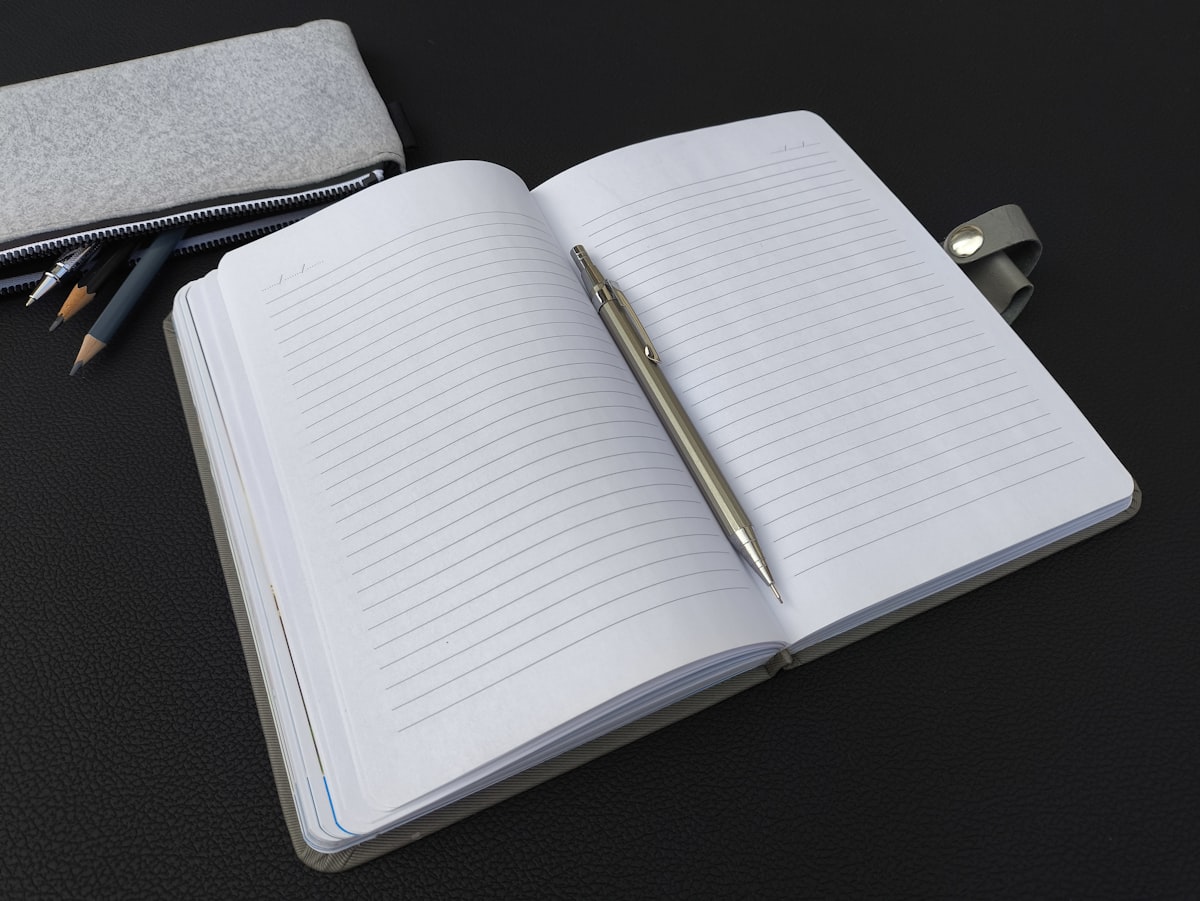
Very little. A pen and paper are enough. You do not need a leather-bound notebook or a specific brand of pen. You do not need a system or a method. You need:
- Something to write with. Any pen, pencil, or digital device.
- Something to write on. A notebook, loose paper, a notes app, or a document.
- A few minutes. Even five minutes is enough to begin.
That is genuinely all. The best journal is the one you will actually use.
How to Write Your First Entry
If you have never journaled before, the blank page can feel intimidating. Here are three approaches to your first entry:
Just Start Writing
Set a timer for five minutes. Write whatever comes to mind without stopping. Do not edit. Do not reread. Just let the words arrive. This is stream-of-consciousness journaling, and it is one of the most freeing ways to begin.
Answer a Question
If freewriting feels too open-ended, give yourself a prompt. Try one of these:
- What is on my mind right now?
- What happened today that I want to remember?
- What am I feeling, and where do I feel it in my body?
Write a List
Lists are underrated journal entries. Try: Five things I noticed today. Or: Three things I am grateful for. Lists lower the barrier to entry because they do not require paragraphs or transitions.
Building a Journaling Habit
Consistency matters more than length. A single sentence written every day is more valuable than a long entry written once a month. Here are practical strategies:
- Anchor it to an existing habit. Journal right after your morning coffee, or just before bed.
- Keep your journal visible. If it is on your nightstand or desk, you are more likely to open it.
- Start absurdly small. Commit to one sentence per day. You will often write more, but the commitment is low enough to maintain.
- Do not aim for perfection. Messy entries, half-finished thoughts, and boring days are all valid. The point is presence, not prose.
Common Concerns
"I am not a good writer." You do not need to be. Journaling is not about writing well — it is about writing honestly.
"What if someone reads it?" Keep your journal in a private place. If privacy is a serious concern, consider a password-protected digital journal.
"I do not have time." You have five minutes. Write during lunch, before sleep, or while waiting for something. Even three sentences count.
"I do not know what to write about." Start with what is true right now. Write about the weather, your lunch, the sound of the room you are in. Boring entries are still entries, and they often lead somewhere surprising.
What Comes Next
Once journaling feels comfortable — and it will — you might explore specific techniques like morning pages, gratitude journaling, or bullet journaling. You might experiment with prompts, or let your practice evolve on its own.
There is no curriculum here. Your journal is yours. The only rule that matters is the one you have already followed by reading this far: you are interested enough to begin.
So begin.